THE ADVENTURE COLLECTIVE® · Independent discovery and booking for outdoor travel

Climb to Terevaka’s summit for panoramic views that make Easter Island’s isolation tangible. This private, guided 3‑hour hike mixes volcanic geology, Rapa Nui history, and a brisk workout with transport from Hanga Roa.
Climb to Terevaka’s summit for panoramic views that make Easter Island’s isolation tangible. This private, guided 3‑hour hike mixes volcanic geology, Rapa Nui history, and a brisk workout with transport from Hanga Roa.
You reach the ridge and the ocean suddenly widens: a raw, endless blue pressing against the island’s volcanic flank. Wind tugs at your jacket; the trail underfoot changes from compacted dirt to broken lava and tephra as you climb toward Terevaka’s summit. From this high vantage the moai-studded coastline and Hanga Roa’s red roofs feel small, the island’s isolation unmistakable.
Verified experiences and guided adventures in the surrounding area.
Operated by AROHA TOURS RAPA NUI · Hanga Roa, Valparaíso Region
You reach the ridge and the ocean suddenly widens: a raw, endless blue pressing against the island’s volcanic flank. Wind tugs at your jacket; the trail underfoot changes from compacted dirt to broken lava and tephra as you climb toward Terevaka’s summit. From this high vantage the moai-studded coastline and Hanga Roa’s red roofs feel small, the island’s isolation unmistakable.
Terevaka is the largest of Rapa Nui’s extinct volcanic cones, its slopes shaped by flows and ash over hundreds of thousands of years. The summit, just over 500 meters, acts as a natural observatory—geology and human history converge here. Polynesian settlers read the horizon for voyaging signs; later generations erected statues and pathways that echo around the island’s edges. Local guides usually weave these cultural threads into the walk, explaining quarrying, ceremonial sites, and the fragile balance of island ecosystems.
Expect a steady 3-hour excursion with roughly 300–500 m of elevation change depending on your route. Terrain is uneven, occasionally steep, and exposed to strong sun and wind. The privatized format in this offering means a tailored pace and time to photograph the panorama.
Practicalities: start early to avoid midday winds, carry at least 1.5–2 liters of water, wear sturdy boots, and layer for winds and rapid temperature swings. This hike is moderately strenuous and not recommended for travelers with back, heart, or pregnancy restrictions. Guides may operate in French, English, or Spanish and provide private transport from Hanga Roa.
The summit rewards effort with a sweeping sense of scale—the sea daring you to remember just how small and remarkable this island is.
The guided excursion is about 3 hours round-trip, though time can vary with pace and photo stops.
Yes, this offering is a private tour and commonly guided in French, English, or Spanish.
Children with good stamina can join, but it’s not recommended for travelers with spinal, heart, or pregnancy restrictions.
You can see several moai-lined coasts and archaeological features from the summit rim, but most statues are found closer to the shoreline.
AROHA TOURS RAPA NUI operates guided outdoor trips and adventures with an emphasis on safety, stewardship, and memorable experiences.
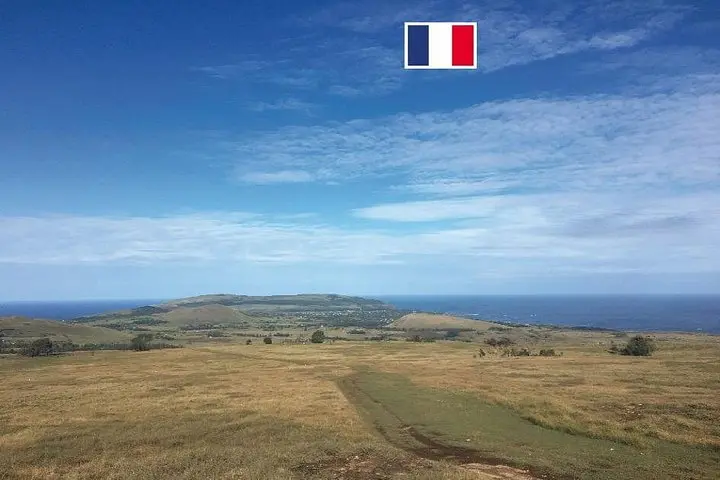
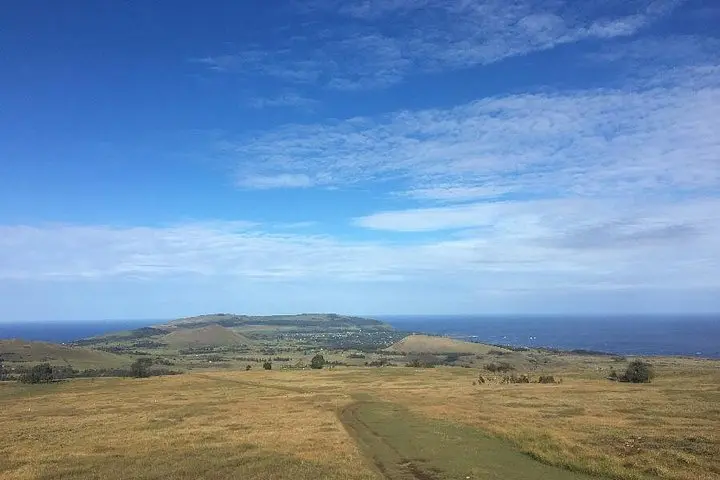
You reach the ridge and the ocean suddenly widens: a raw, endless blue pressing against the island’s volcanic flank. Wind tugs at your jacket; the trail underfoot changes from compacted dirt to broken lava and tephra as you climb toward Terevaka’s summit. From this high vantage the moai-studded coastline and Hanga Roa’s red roofs feel small, the island’s isolation unmistakable.
You reach the ridge and the ocean suddenly widens: a raw, endless blue pressing against the island’s volcanic flank. Wind tugs at your jacket; the trail underfoot changes from compacted dirt to broken lava and tephra as you climb toward Terevaka’s summit. From this high vantage the moai-studded coastline and Hanga Roa’s red roofs feel small, the island’s isolation unmistakable.
Terevaka is the largest of Rapa Nui’s extinct volcanic cones, its slopes shaped by flows and ash over hundreds of thousands of years. The summit, just over 500 meters, acts as a natural observatory—geology and human history converge here. Polynesian settlers read the horizon for voyaging signs; later generations erected statues and pathways that echo around the island’s edges. Local guides usually weave these cultural threads into the walk, explaining quarrying, ceremonial sites, and the fragile balance of island ecosystems.
Expect a steady 3-hour excursion with roughly 300–500 m of elevation change depending on your route. Terrain is uneven, occasionally steep, and exposed to strong sun and wind. The privatized format in this offering means a tailored pace and time to photograph the panorama.
Practicalities: start early to avoid midday winds, carry at least 1.5–2 liters of water, wear sturdy boots, and layer for winds and rapid temperature swings. This hike is moderately strenuous and not recommended for travelers with back, heart, or pregnancy restrictions. Guides may operate in French, English, or Spanish and provide private transport from Hanga Roa.
The summit rewards effort with a sweeping sense of scale—the sea daring you to remember just how small and remarkable this island is.